Sponsor licence compliance: duties, deadlines & records
A plain-English guide to what the Home Office expects from sponsor licence holders — reporting deadlines, Appendix D record keeping and how to be ready for a compliance visit.
Last reviewed November 2026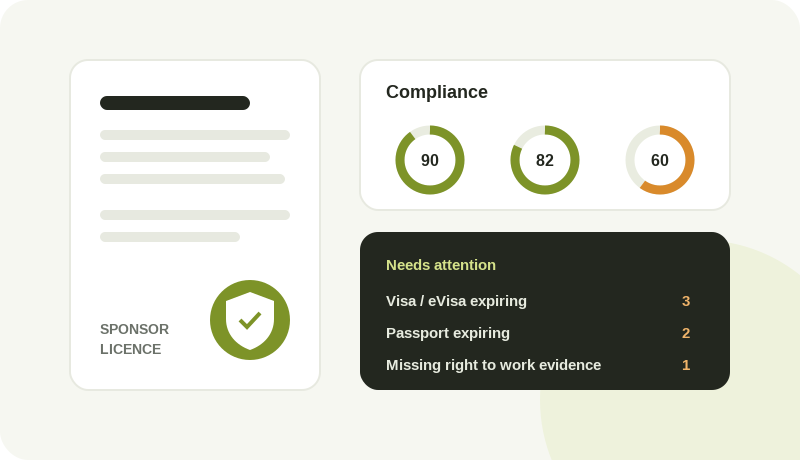
The four groups of sponsor duties
When the Home Office grants a sponsor licence it is trusting you to help run the immigration system. In return you take on duties that last for as long as you hold the licence:
- Record keeping — keep the documents listed in Appendix D for each sponsored worker.
- Reporting — tell the Home Office about specified changes through the Sponsor Management System (SMS).
- Complying with the law — the Immigration Rules, employment law, minimum wage and right to work rules.
- Co-operating with the Home Office — allowing access during compliance visits and acting on any action plan.
The Home Office guidance updated in 2026 also spells out a wider expectation of good governance and the integrity of the sponsorship system.
Reporting deadlines
| Event | Usual deadline | Where |
|---|---|---|
| Sponsored worker does not start work (or starts late) | 10 working days | SMS |
| Unauthorised absence of more than 10 consecutive working days | 10 working days after the 10th day of absence | SMS |
| Sponsorship ends early (resignation, dismissal, contract ends) | 10 working days | SMS |
| Significant change to the job, salary or work location | 10 working days | SMS |
| Change to key personnel or your organisation's details | 20 working days (some events 10) | SMS |
| Merger, takeover, change of ownership, insolvency | Varies — often 10 or 20 working days | SMS / change of circumstances |
General deadlines only. The exact trigger and deadline for each event are set out in the current Workers and Temporary Workers sponsor guidance on GOV.UK.
Count from the right dayYou can count 10 working days correctly and still report late if you start counting from the wrong trigger. Keep dated records of each event so you know exactly when the clock started.
Appendix D record keeping
Appendix D to the sponsor guidance lists the documents you must keep. It was revised again in 2026 to reflect the extended right to work scheme. In practice you need, for each sponsored worker:
- Evidence of the right to work check and the date it was carried out.
- Up-to-date contact details and address history.
- Recruitment records showing how the role was filled.
- Records of pay, and evidence the salary meets the requirements of the route.
- Attendance and absence records.
And for your organisation: your licence details, authorising officer and key personnel, and the policies you have in place. HR systems should match what you have told the Home Office through SMS.
Monitoring attendance and absence
Sponsors must know whether their sponsored workers are turning up. Shift-based businesses find this hardest, because people work across different sites and rotas change daily. Clock-in data tied to the rota is the simplest evidence you can have: it shows when someone worked, where and for how long, and makes a run of unauthorised absence obvious long before day 10.
Compliance visits
The Home Office can visit before or after granting a licence, with or without notice. Officers may ask to see the records for any sponsored worker, speak to staff and check that the job being done matches the certificate of sponsorship. The best preparation is records you can pull up in seconds, for anyone, without hunting through email.
What happens if you get it wrong
Breaches can lead to your licence being downgraded to a B-rating with a paid-for action plan, suspended or revoked. Revocation stops you sponsoring anyone and can cut short the permission of the workers you sponsor. Illegal working found during a visit can also bring a civil penalty of up to £60,000 per worker — estimate yours with the penalty calculator.
How VP HR keeps you audit-ready
- Company compliance profile — sponsor licence, authorising officer, key personnel and policy documents in one place.
- Sponsored worker records — right to work evidence, visa details, contact and address history, contracts and documents on each profile.
- Expiry alerts — visas, passports, eVisa permission and licences flagged before they lapse.
- Attendance evidence — GPS clock-in, timesheets and absence tracking linked to the rota.
- Compliance scores — see at a glance how complete your company and employee records are.
Explore the full feature set on Home Office compliance software, or see pricing — unlimited employees for £79.99 a month.
This guide is a summary for employers and is not legal advice. Always follow the current sponsor guidance on GOV.UK and take advice from a qualified immigration adviser.
Sponsor licence FAQs
What are the main sponsor licence duties?
Sponsor licence holders must keep the records listed in Appendix D of the sponsor guidance, report specified changes through the Sponsor Management System on time, comply with the Immigration Rules and wider UK law, and co-operate with the Home Office, including during compliance visits.
How long do I have to report a change to the Home Office?
Most changes affecting a sponsored worker must be reported within 10 working days, and most changes affecting your organisation within 20 working days, through the Sponsor Management System. Some events have their own trigger, so check the current sponsor guidance for each one.
When must I report unauthorised absence?
You must report a sponsored worker who is absent from work without your permission for more than 10 consecutive working days. The report is due within 10 working days of the tenth consecutive working day of absence.
What records does Appendix D require?
Appendix D lists the documents sponsors must keep, including evidence of right to work checks, contact details and address history for each sponsored worker, recruitment records, and pay and attendance records. The exact list and retention rules are set out in the current version on GOV.UK.
What happens if I breach my sponsor duties?
The Home Office can downgrade your licence to a B-rating with an action plan, suspend it or revoke it. Revocation means you can no longer sponsor workers, and the permission of workers you sponsor may be cut short.
Can software keep me compliant?
Software cannot submit reports or make legal judgements for you, but it can keep the evidence the Home Office expects in one place, track every expiry and give you early warning of reportable events. That is what VP HR is built to do.
Keep reading
Be ready for your next compliance visit
Every sponsored worker record, expiry and attendance log in one system.